Summary of the Cyanobacteria GIS Scientific Day – May 2025 (Bordeaux)
The technical day held on May 20, 2025, in Bordeaux, was organized by the Scientific Interest Group (GIS) with the objective of bringing together a broad community of researchers working on cyanobacteria, as well as French-speaking environmental managers. The event gathered nearly 200 participants (75 attending in person and over 120 remotely). It provided an opportunity for both scientific and operational exchanges through oral presentations and dedicated discussion sessions. This year's theme focused on benthic cyanobacteria and aimed to provide insights into the following question: “Where do we stand on benthic cyanobacteria?”.
Indeed, in Southwestern France—but not exclusively—many lakes and river stretches are subject to various human activities (e.g. fishing, hunting, swimming, water sports, etc.). Some of these aquatic environments are also used as sources of drinking water. However, they are sometimes, either regularly or occasionally, affected by massive proliferations of potentially toxic benthic cyanobacteria.These proliferations can restrict some or all uses of these environments (e.g. presence of toxins, algal mats, etc.) and may lead to animal deaths, including pets and wildlife. It is therefore essential to understand the mechanisms driving these blooms, to assess toxicological risks, to stay informed about regulatory developments regarding their monitoring and management, and to explore new monitoring approaches, such as how to analyze the algae and their toxins. This conference day aimed to foster exchange on these topics, to benefit from the experiences shared by environmental managers, and to better understand their needs and expectations.
Access to the presentations and recordings from the event here.
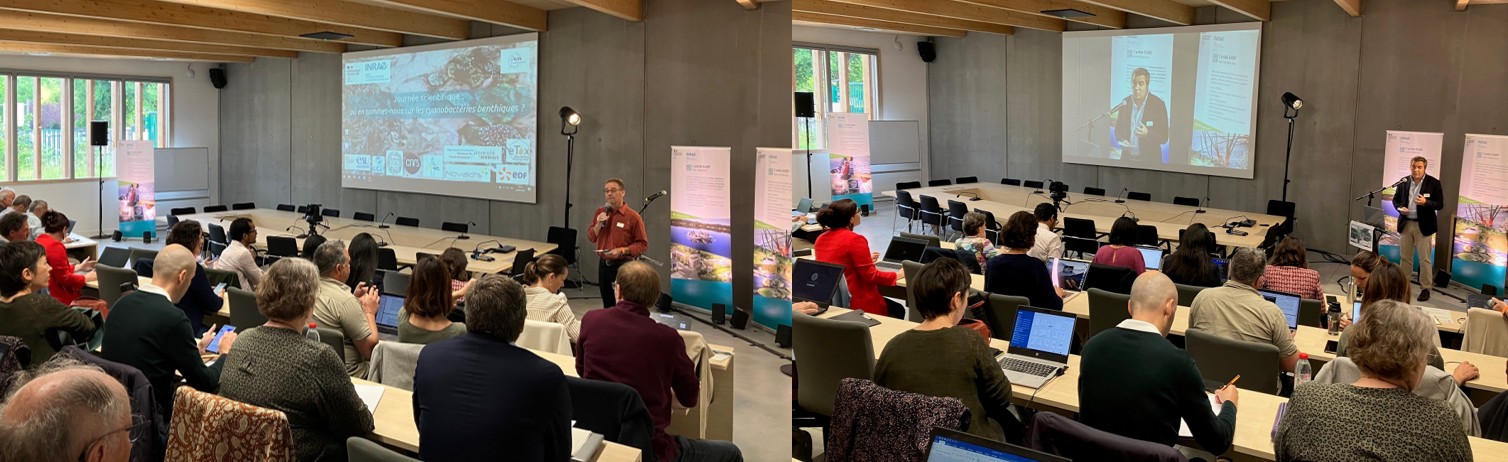
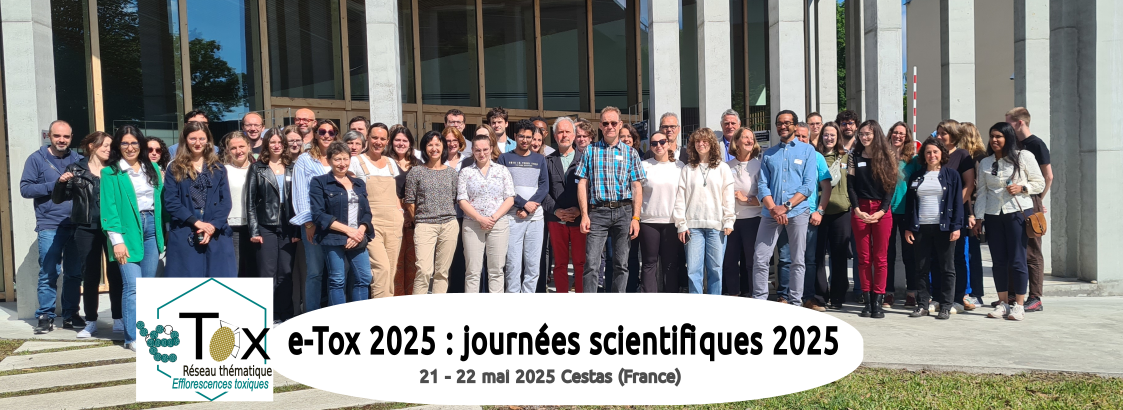
This was followed by two days of a scientific symposium organized by the new eTox network: Toxic Blooms in the Anthropocene Era. To mark the launch of the new CNRS thematic network eTox, two symposium days aimed at scientists and students were held on May 21 and 22, 2025. These days brought together around 65 participants from various institutions and research laboratories specializing in marine environments (Ifremer, universities) and freshwater environments (MNHN, INRAE, universities, ISARA, etc.). The event provided an opportunity to share the latest research advances on cyanobacteria and toxic algae, while encouraging presentations by students, including master’s interns and doctoral candidates.
Conference Agenda here.
Last update on 20/06/2025.