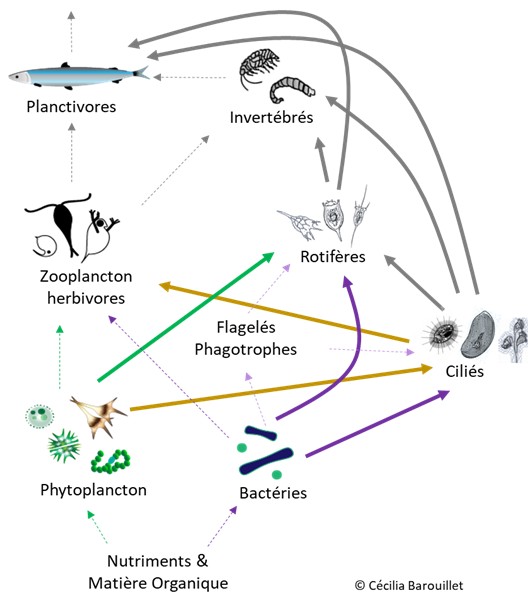
 © Cécilia Barouillet
MICROTROPHIQUE
Towards the integration of micro-predators into the lacustrine food webs models
SECTIONFunctional approach |
PERIODJanuary 2023 - December 2024 |
|
FUNDINGPôle ECLA |
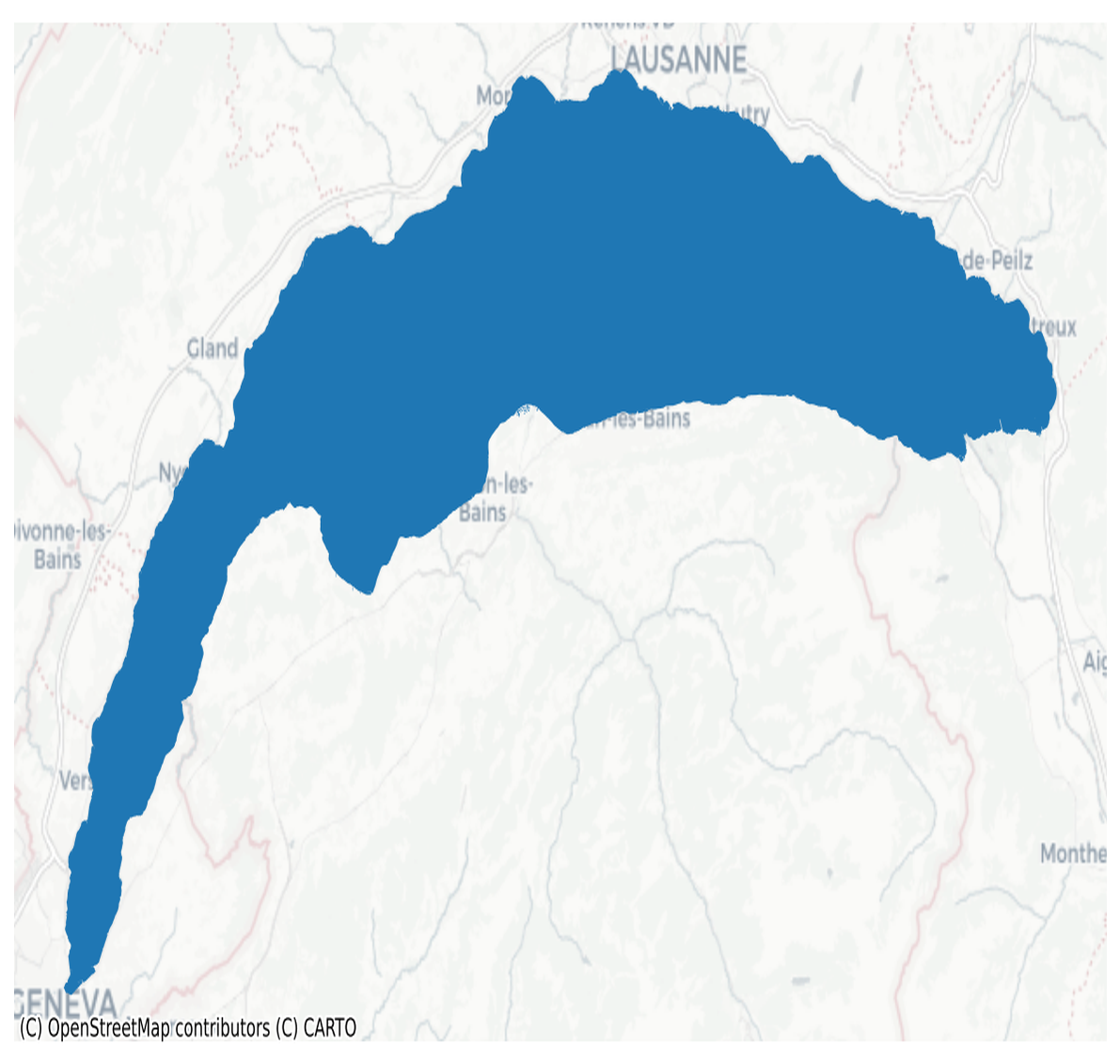
STUDY AREA(S)Léman |
|
PARTNERS |
COORDINATOR(S)I. DomaizonA. Sentis V. Frossard |
Project Description
Project Context :The structure of trophic networks (TN) strongly influences how lakes respond to environmental pressures and maintain resilience. Yet, lacustrine TN models are often incomplete due to limited data on certain biological groups, such as micro-predators (e.g. ciliates and rotifers). Although frequently overlooked, these organisms play a critical role in the transfer and recycling of matter. Recent access to data sources such as eDNA inventories now facilitates their inclusion in TN models, allowing a more accurate assessment of their contribution to trophic network structure and stability.
Project Objectives :This project aims to integrate planktonic micro-predators (ciliates and rotifers) into pelagic food-web models. By leveraging environmental DNA data, it seeks to improve the construction of ecological networks and the functional assessment of lake ecosystems. The resulting food-web models are then analysed to explore temporal variability in energy flows, network structure and stability, thereby promoting a dynamic view of trophic networks.
Project Results

To go further
Useful Links :
https://nsojournals.onlinelibrary.wiley.com/doi/pdf/10.1002/oik.11528
https://datadryad.org/dataset/doi:10.5061/dryad.41ns1rnrr
Contact : isabelle.domaizon[at]inrae.fr