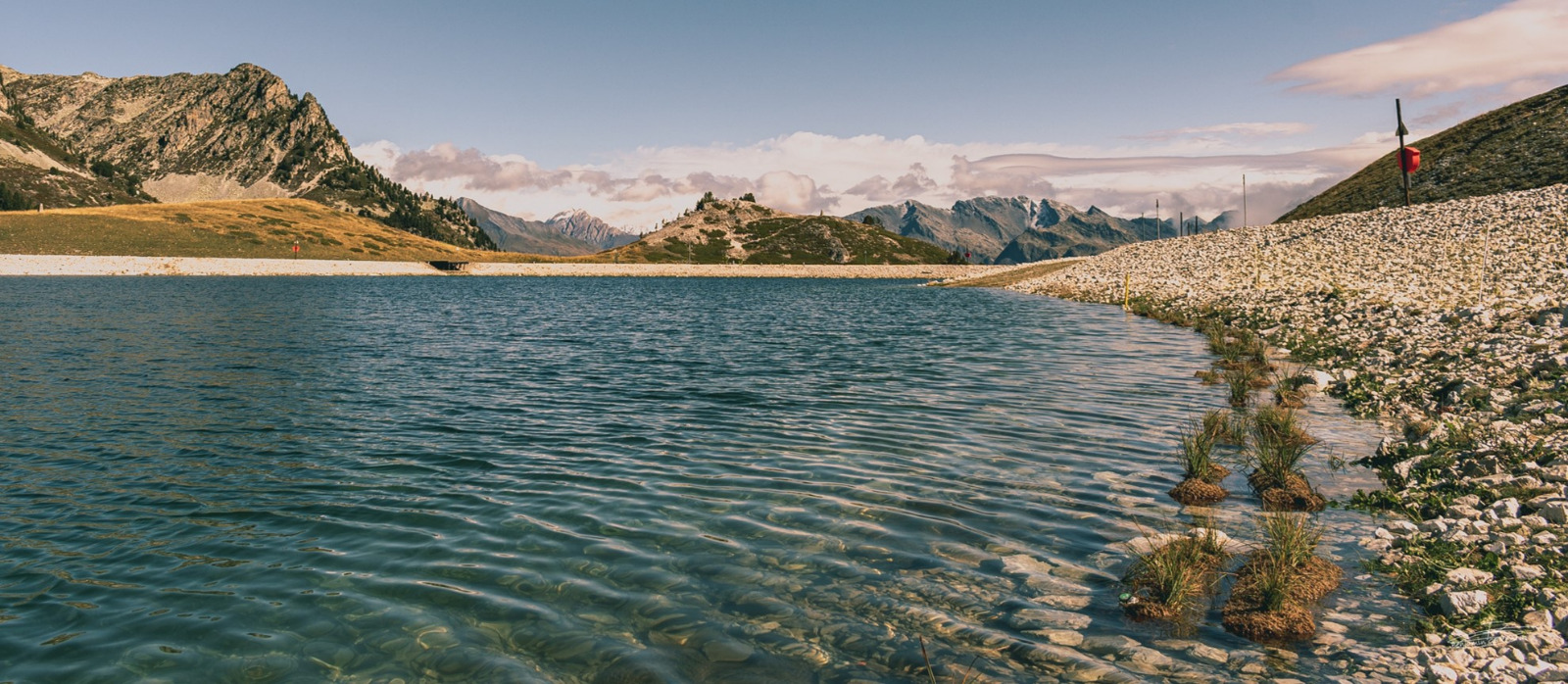
 © B. Gerfand
RETALT
What benefits does shoreline vegetation in high-altitude reservoirs provide for biodiversity?
SECTIONRestore, reduce, compensate |
PERIODJanuary 2023 - December 2030 |
|
FUNDINGPôle ECLAprogramme Interreg France-Italia ALCOTRA BECCA |
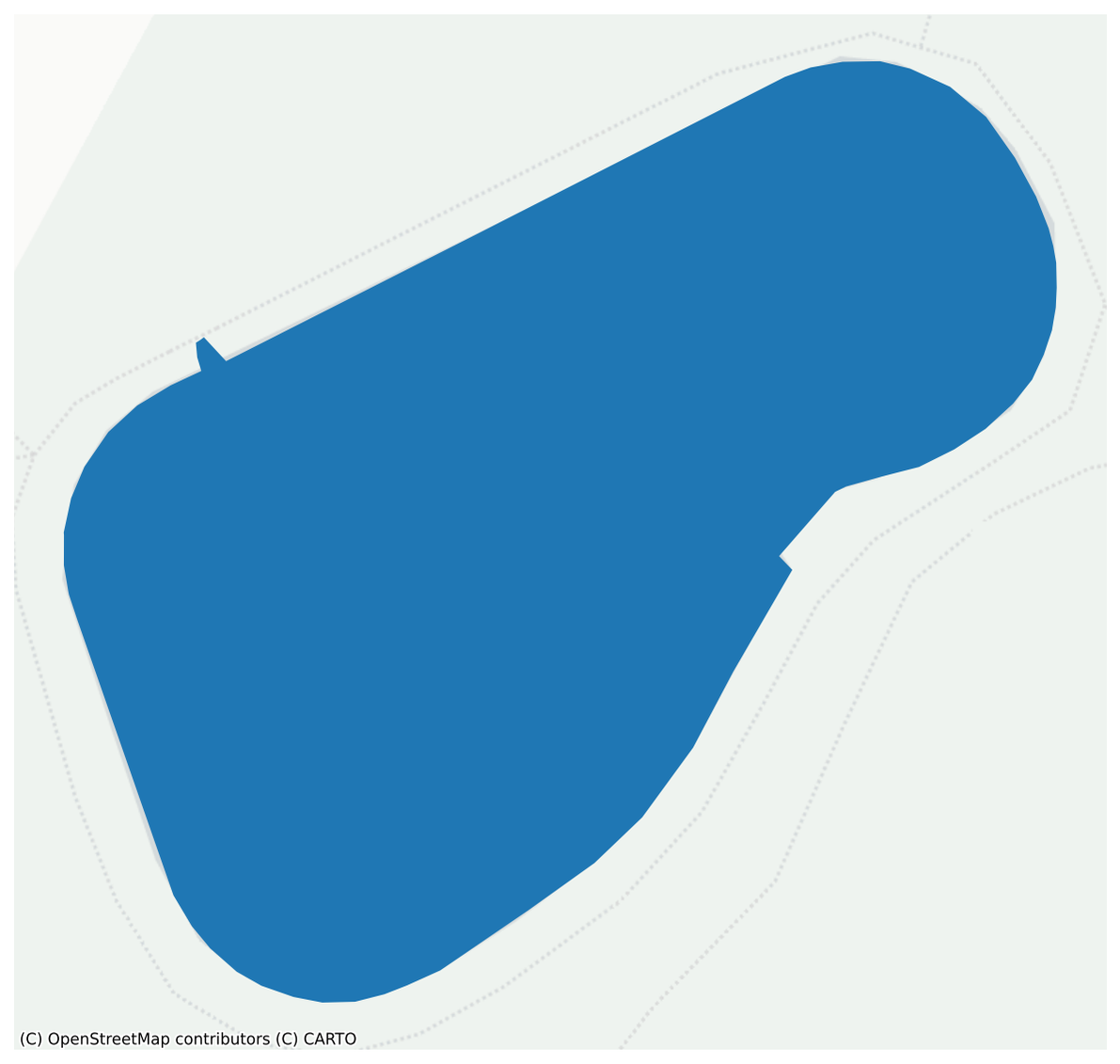
STUDY AREA(S)Retenue de l'Adret des Tuffes |
|
PARTNERSUniversité Grenoble Alpes, INRAE, LESSEM, 38000, Grenoble, FranceADS–Domaine de Montagne Les Arcs/Peisey-Vallandry/Villaroger, Bourg-Saint-Maurice, France |
COORDINATOR(S)F. ArthaudS. Westrelin |
Project Description
Project Context :High-altitude reservoirs, constructed for artificial snow production, are increasingly common in mountain environments. Although their environmental impacts are well documented, few studies have assessed their contribution to biodiversity. Reservoirs with vegetated shorelines host higher numbers of macroinvertebrates and conservation-priority odonates. They are also used by amphibians, although certain features (slopes, linings, drawdowns) may be detrimental. The currently absent aquatic vegetation could further enhance their ecological value.
Project Objectives :Can these artificial reservoirs promote biodiversity? To address this question, experimental plantings are being tested along their shorelines. Which type of riparian vegetation should be prioritized to enhance biodiversity in high-altitude reservoirs? This project addresses three main questions: (i) can helophytic or hydrophytic vegetation establish and persist there? (ii) can root development damage the geotextile lining? (iii) how can ecological integration, safety, and operational requirements be reconciled?
Project Results
The project aims to assess the feasibility of establishing vegetation on the shorelines of high-altitude reservoirs and to identify the conditions conducive to the long-term establishment of plants. It also seeks to evaluate the attractiveness of these measures for aquatic and amphibian fauna and to document their potential role as habitat or dispersal corridors. The resulting findings will inform recommendations for improving the ecological integration of existing and future high-altitude reservoirs.
To go further
Useful Links :
https://doi.org/10.1007/s00027-024-01136-0
Contact : florent.arthaud[at]univ-savoie.fr